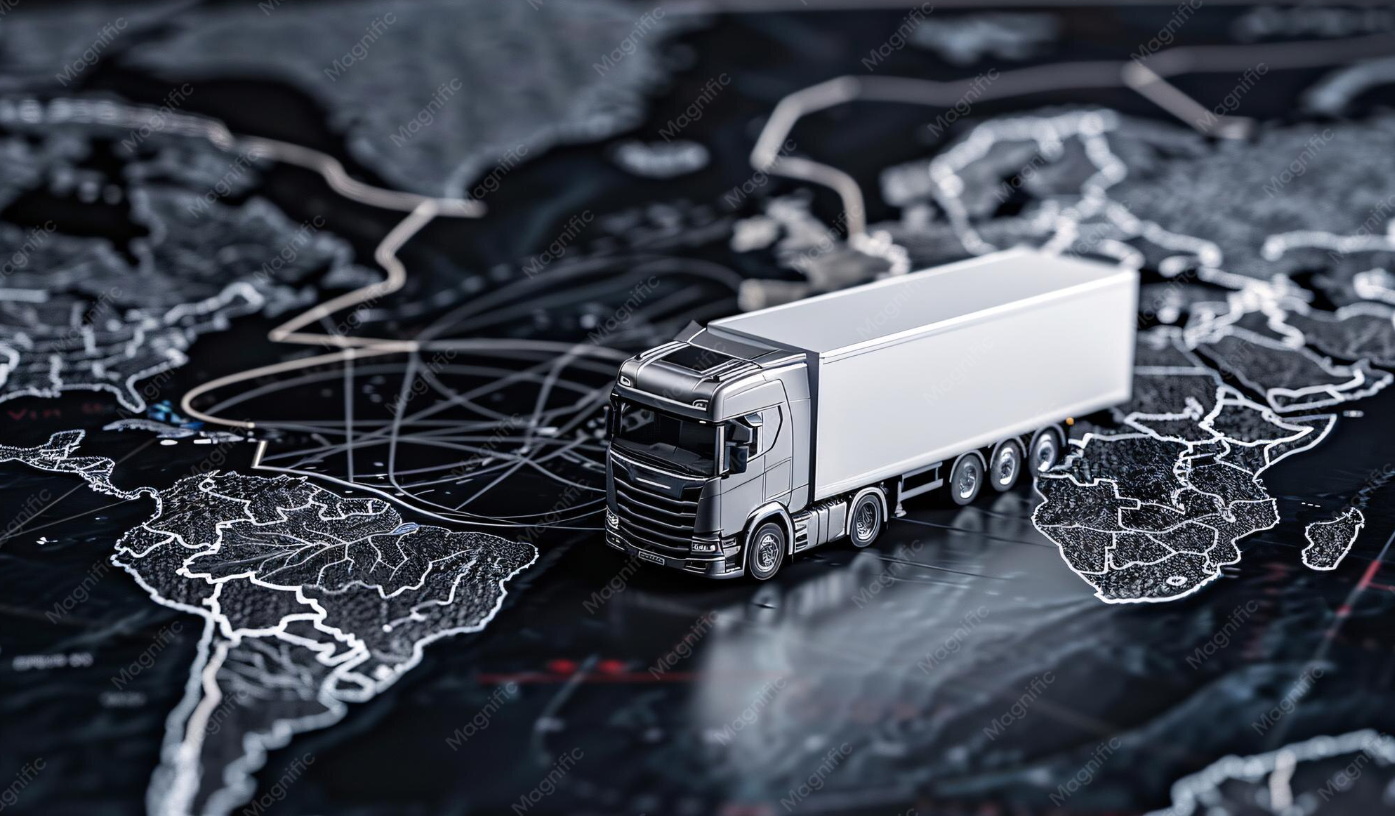
How to choose a route for international transportation
We review the key factors that affect delivery time and cost.
Choosing a route for international cargo transportation is more than just drawing a line on a map between two points. It's a multi-factorial task whose solution determines cargo safety, deadline compliance, the final cost of transportation, and, ultimately, the reputation of the logistics operator. In today's geopolitical turbulence, when traditional routes are blocked and new ones are only just emerging, the selection process becomes even more complex. Our company offers a systematic approach based on an analysis of key criteria and the use of current market information.
Key Selection Criteria: From Price to Risk
Any logistics decision begins with a balance between several fundamental parameters. A professional logistician considers dozens of factors when planning a route to develop an effective transport and logistics plan.
1. Transportation Cost and Delivery Time
These are the two cornerstones of logistics. Traditionally, companies strive to minimize both metrics, but in practice, a compromise must be found. For example, air transportation may take approximately 6 days, but its cost is significantly higher than sea routes. For standard containerized cargo, sea freight costs can fluctuate around $150 per ton depending on the destination, while air freight can reach $8,800 per ton.
It's important to consider more than just the direct cost per ton-kilometer. Transportation costs include customs duties, insurance, port and border crossing fees, and additional fuel costs for forced detours. For example, turning ships around Africa increases costs by 35% for container ships and more than doubles them for tankers.
2. Reliability and Safety
Reliability of delivery means a guarantee that the cargo will arrive on time and undamaged. This criterion becomes paramount in unstable environments. Risks on specific routes can be caused by military conflicts, piracy, dockworker strikes, or even weather conditions.
A clear example is the situation in the Black Sea and the Sea of Azov, where risks to merchant shipping remain. Operators are introducing surcharges for war risks, and vessels are being rerouted to ports in the Baltic Basin. Under these conditions, a low route price is meaningless if it does not provide predictability.
3. Infrastructure and Transportation Capabilities
The route must be provided with the necessary infrastructure: access roads, ports with the required capacity, temporary storage facilities, and checkpoints. It is important to assess the capacity of border crossings. For example, the redirection of cargo to the Turkey-Georgia-Russia land routes created enormous pressure on the Verkhniy Lars checkpoint and the Georgian Dariali crossing, leading to multi-day queues of hundreds of vehicles.
Also, it is necessary to consider permissible axle loads, traffic restrictions on bridges and tunnels, and the seasonality of certain sections.
Alternative Routes: Geopolitics as a Selection Factor
Modern logistics requires an understanding of global transport corridors. Traditional routes, such as the Suez Canal or the Trans-Siberian Railway, currently face significant challenges. Let's consider two alternative routes that are currently receiving attention.
1. International North-South Transport Corridor
This route is seen as an alternative for trade flows between South Asia, the Middle East, and Northern Europe. Theoretically, it promises a 30-40% reduction in time and costs compared to traditional routes. However, in practice, the project faces significant challenges.
Currently, the corridor is only partially operational. Infrastructure limitations in Iran, opaque tariff mechanisms, and underfunded hubs make it uncompetitive. Cargo transit takes 30-40 days compared to 20-25 days via sea routes, and container costs are often 20-35% higher. Moreover, military risks in the region could lead to a complete halt in traffic if insurance companies refuse to cover the risks.
2. Middle Corridor (Trans-Caspian Route)
This route through the Caspian Sea, the Caucasus, and Central Asia is seen as a niche option between fast air travel and slow sea travel. Its advantage is risk diversification, as opposed to maritime routes located in geopolitically tense zones.
However, this route also faces its own challenges: the route does not yet have sufficient capacity to compete with ocean shipping. Although cargo volumes along this route are growing (reaching 4 million tons in 2024), they are still small compared to the hundreds of millions of tons transported by sea.
How to make the right decision
Given the high volatility of the market, route selection should be based on an algorithm that considers not only immediate benefits but also strategic sustainability. We suggest the following steps:
Comprehensive assessment using the LPI system. Use the Logistics Performance Index (LPI), which includes customs efficiency, infrastructure quality, cargo tracking capabilities, and on-time delivery.
Analysis of incident statistics. Based on annual incident statistics for specific modes of transport, you can assess the risk of damage or loss of cargo during shipment along a specific route.
Consider administrative barriers. Consider not only the number of kilometers but also the number of countries through which the cargo passes. The more borders, the higher the risk of lengthy delays, the more difficult visa processing is for drivers, and the higher the labor costs associated with preparing the necessary documentation.
Multimodal approach. Don't rely solely on a single mode of transport. Using a combination of sea, rail, and road transport allows you to compensate for the disadvantages of one mode with the advantages of another. Railroads are efficient over long distances and are unaffected by weather, automobiles offer flexibility, and sea transport ensures low costs per ton.
Insurance and fintech. When changing routes, be sure to review your insurance terms. The rise in military risks has led to an increase in insurance premiums by six times or more in some regions. Furthermore, changing routes entails shifts in payment cycles, requiring companies to revise their letter of credit payment schedules.
Conclusion
Choosing a route for international transportation today is not an intuitive process, but a complex engineering task requiring an analytical approach and constant monitoring of the situation. A 21st-century transport and logistics company is not just a carrier, but a strategic partner that helps clients navigate the maze of changing regulations, risks, and opportunities. Use modern optimization methods and trust experts who see the whole picture. Only a comprehensive analysis will allow you to find the optimal route that balances cost, time, and safety.